Cost to Build a Custom Home in Bend, Oregon (2027)
A custom home in Bend or Central Oregon starts around $475 per square foot for the construction. For higher-end designs that number will likely be closer to $650–$900, but it can go $900–$1,200 or more for highly-customized luxury builds.
Your complete project budget also needs to account for land, site development, design, fees, and other costs.
We’ve helped homeowners throughout the Bend region build custom homes they love at a budget they’re happy with.
For 2027, this article gives you some helpful planning ranges to start from, plus what can impact the final budget. If you want to know how much it will cost to build the home you’re imagining, contact us and tell us about your property and your vision, and we’ll help you dial it in.
How much does it cost to build a custom home in Bend?
For an early construction budget, these tiers provide a good starting point:
- Around $500–$650 per square foot and up: A simpler custom design with restrained finish selections.
- Around $650 to $900 per square foot: A more extensively detailed home with upgraded windows, cabinetry, finishes, and architectural features.
- Around $900–$1,200 per square foot (or more): A premium architectural home with demanding structural details, extensive custom work, or high-performance systems.
These aren’t fixed packages. A difficult lot can raise costs even when the house itself is simple.
When you get a bid it’s also important to note how square footage is measured.
Is the figure based on conditioned living space? How are garages, covered patios, and detached buildings accounted for? Those definitions can make two bids look quite similar, even if they’re actually very different.
What should your full project budget include?
Before you decide what you can build, separate the house construction estimate from the other costs needed to finish the project.
House construction. Understand what’s included for the foundation, framing, exterior, mechanical systems, and interior finishes. Confirm whether appliances, builder fees, and project supervision are included.
Land and site development. Account for the property purchase if needed, along with excavation, grading, utility connections, drainage, access, and any retaining structures. Owning the land already doesn’t eliminate the cost of preparing it.
Design and approvals. Include architecture, engineering, surveys, permits, applicable system development charges, and any community design review expenses.
Outdoor work and completion. Check the scope for driveways, patios, landscaping, fencing, and other work outside the house. Furnishings and moving expenses belong in your personal budget even when they aren’t part of the construction contract.
Contingency. Keep a reserve for unresolved conditions and unexpected work. The appropriate amount depends on how much is known about the property and design.
Some of these costs may already be included in your builder’s estimate. Confirm that before adding them separately. A useful budget makes every major expense visible without counting it twice.
What affects custom home costs in Central Oregon?
Excavation and the building site
Rock excavation, sloped terrain, and difficult access can change the amount of work required before framing begins. Foundation design, drainage, and retaining walls may add further costs.
Investigate the site before designing around it. If you’re still choosing a property, involve your custom home builder while you can compare alternatives.
Utilities and rural infrastructure
Confirm where water, sewer, power, and other services are available, and what it takes to connect them. A service near the property isn’t necessarily a ready connection.
Where septic is needed in Deschutes County, an approved site evaluation is required before applying for a new system installation permit. Well and septic needs should be investigated early on applicable rural properties.
Permits and community requirements
Bend permit fees and system development charges are separate considerations from the cost of building the house. The city recommends getting a project-specific SDC estimate.
Other Central Oregon locations have their own applicable fees and approval processes. Private communities may also have design review requirements that affect materials or design. Check the rules for the actual property rather than applying one Bend fee allowance everywhere.
Climate and engineering
Snow loads and frost depth are site-specific design considerations. Deschutes County directs homeowners and designers to property-specific climatic and geographic design criteria.
Your design team should establish those requirements early so the structure and foundation can be priced accordingly.
Architecture and finish selections
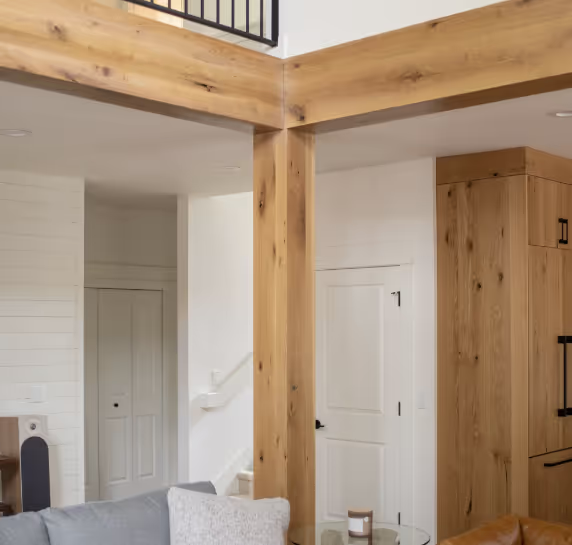
Large glass openings, complex rooflines, custom cabinetry, and specialty detailing all influence cost. Outdoor living areas also need a defined scope.
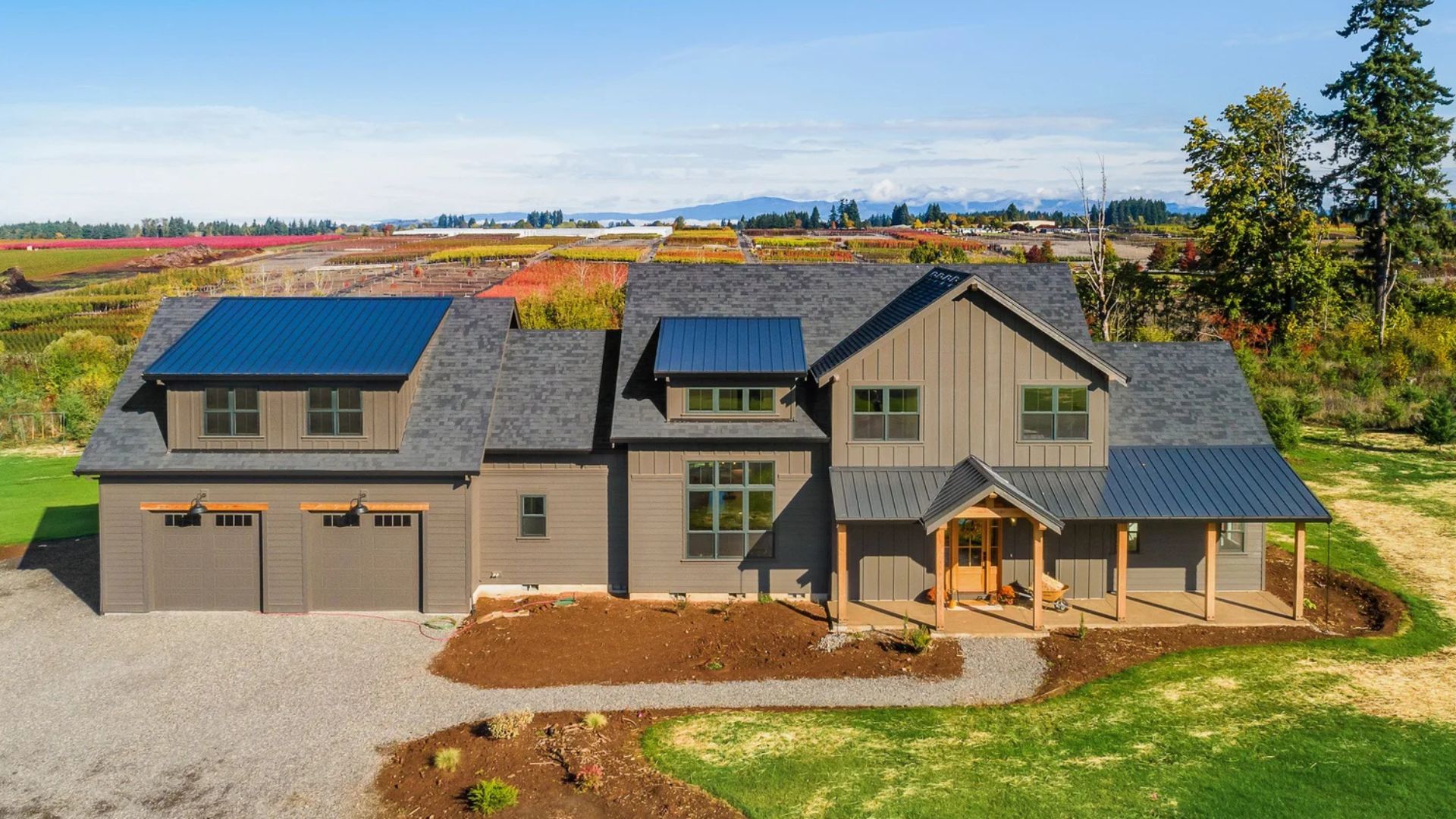
Our Pronghorn custom home and Ranchview home at Brasada Ranch in Powell Butte show different approaches to custom design in Central Oregon. Use examples like these to discuss the features you want, then have those features priced for your own project.
How to build a realistic budget before construction
Start with your total spending limit
Tell your builder and architect what you can spend on the complete project, including the expenses outside the construction contract. That gives the team a useful constraint when evaluating the lot, home size, and design.
Price the decisions that matter most
You don’t need every cabinet pull chosen at the beginning. You do need a realistic direction for windows, cabinetry, appliances, flooring, and major architectural features.
An allowance is a placeholder amount for an item that hasn’t been fully selected or priced. Ask what the allowance will actually buy. A low allowance won’t help if it doesn’t match your expectations.
Compare the scope behind each estimate
Look for documented inclusions, exclusions, assumptions, and allowances. Confirm how builder fees and changes are handled.
If two estimates differ substantially, work through the scope before deciding that one builder costs less. The lower number may cover less work or leave more decisions unresolved.
Update the budget as the plans develop
Revisit pricing as drawings, engineering, and selections become clearer. Resolve differences while the design can still change without undoing completed construction.
At Brothers Building, our process emphasizes clear line-item budgets, documented scope, and transparent updates. That helps you understand the decisions ahead and what they mean for your project.
Budget and schedule should also be planned together. See our custom home planning and construction timeline for the work that happens before ground is broken.
Frequently asked questions
Does cost per square foot include land, site work, and permits?
Don’t assume it does. Cost per square foot is a construction benchmark, and builders define its scope differently. Request written inclusions and exclusions covering land, site development, design, permits, utilities, and outdoor work.
How much would a 2,500-square-foot custom home in Bend cost?
At an illustrative $600 per square foot, house construction would be $1.5 million. Your actual cost depends on the design, property, and selections. Add expenses excluded from the construction estimate to establish the full project budget.
Can I get a useful budget before the architectural plans are finished?
Yes, an early budget can help test feasibility and guide design. It should identify its assumptions and unresolved items. Expect the estimate to become more specific as the drawings, site information, and selections develop.
How can I control costs without compromising construction quality?
Start with an efficient design, understand the site, and prioritize the features that matter most to you. Resolve major selections early. Look for savings in complexity and finish choices while maintaining appropriate structural, weatherproofing, and installation standards.
Planning a custom home in Bend or Central Oregon?
A useful budget gives you a clearer path to the home you want. It shows what the project requires, which decisions remain open, and where you have room to adjust.
Brothers Building offers custom home construction with an emphasis on craftsmanship, accountability, and clear communication.
Start the conversation and tell us about your property, priorities, approximate budget, and timing.

Related Resources
Take a look at similar projects to see more our relentless commitment to building it right.
See All resources

Get Your Project
Built Right
Work with a builder who does whatever it takes to deliver excellent results on time and on budget, with transparent accountability at every step.
Start the Conversation